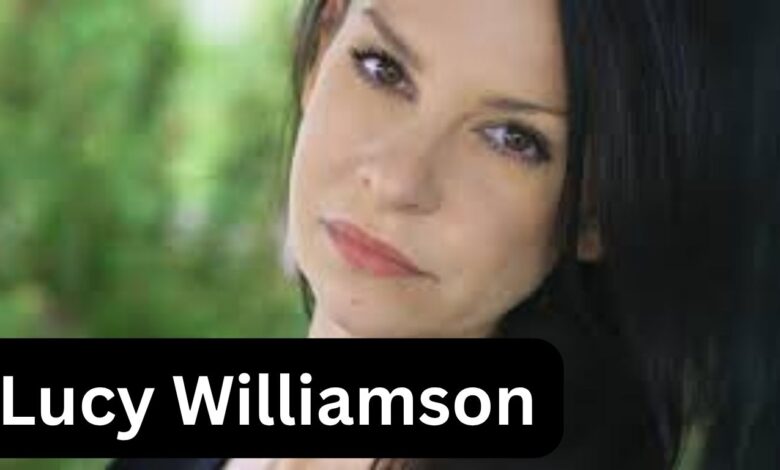
In an era of rapid global change, the news media often depends on correspondents who can bridge cultures, languages and crises with clarity and composure. One such journalist is Lucy Williamson, whose reporting for BBC News has taken her across continents and into the heart of major world events. In this article we explore her background, career milestones, reporting approach, impact, and the challenges she faces — giving a comprehensive view of Lucy Williamson’s work and legacy.
Early Life and Education
Although many details of Lucy Williamson’s personal background are not widely publicised, what is known paints the picture of an academically strong and internationally-oriented individual. According to the site TVMaze, she graduated from the University of Manchester in 1997 with a Bachelor’s degree in English and Persian.
Her choice to study Persian signals an early interest in languages and cultures beyond the Anglophone world — a foundation that would serve her well in foreign correspondence.
Path into Journalism & Early Career
Lucy Williamson began her career at the BBC in October 2002, as noted in TVMaze’s profile. Early assignments included coverage in the Middle East, Indonesia and Korea — postings that demanded adaptability and resilience. For example:
- She reported from Jakarta in Indonesia during a period when the country was recovering from major natural disasters and dealing with political change.
- She also spent time as a correspondent in Korea, a region of major geopolitical tension.
These early assignments helped build her profile as a foreign correspondent willing to travel into complex environments and deliver stories with nuance and depth.
The Paris Correspondent Role
In 2014, Lucy Williamson became the BBC’s Paris correspondent — a role that involved covering European politics, social unrest, terror attacks, and France’s position in the broader global arena.
From her base in Paris, Williamson was able to analyse and bring context to events such as:
- The rise of populist movements and their impact across Europe.
- The fallout from terror attacks in France and the intersection of security, culture and society.
- European responses to migration, EU-dynamics and shifting global alliances.
Her work in Paris signalled a shift from earlier conflict-zone reporting into a role where she had to blend cultural commentary, political insight and on-the-ground journalism.
Signature Reporting Style & Strengths
What sets Lucy Williamson apart is her combination of linguistic skill, field-reporting experience and ability to convey stories with empathy and precision. Among her key strengths:
- Language and cultural fluency: With her academic background in Persian and her postings in multiple countries, Williamson is comfortable operating across cultural divides — an asset when covering international stories.
- Conflict-zone experience: She has reported from the Middle East and other regions where access and safety are major concerns. For instance, her by-lines in the MuckRack media database list many pieces from Gaza, the West Bank and Syria.
- Human-centred storytelling: Rather than only presenting high-level political or military developments, Williamson often draws attention to the lives of civilians, the impact of conflict on families and the local human narratives behind the headlines.
Combined, these qualities help Lucy Williamson deliver reporting that resonates with global audiences — conveying both the facts and the human dimension of stories.
Major Assignments & Noteworthy Coverage
Over her career, Lucy Williamson has handled many major assignments. A few highlights include:
Middle East & Conflict Zones
Williamson has reported extensively from the Middle East — including Gaza and the West Bank. For example, she covered an incident in which Israeli forces and Palestinian settlers clashed over olive-trees near Turmus Aya.
Another piece she authored: “Inside one battle-scarred Gaza building, displaced families tell the story of the war.
European Unrest & French Politics
From Paris, she covered the Yellow Vest protests, the changing French political landscape and the impact of Brexit on France’s ties with the UK and EU. While specific articles are not always individually cited online, her role as Paris correspondent implies this breadth.
Humanitarian Reporting
Williamson has also reported stories that emphasise humanitarian dimensions — such as access to aid in Gaza, the plight of displaced families and communities trapped by conflict. These pieces often require explanatory journalism: helping audiences understand not only “what” is happening but “why”.
Impact & Reputation in Journalism
Over the years, Lucy Williamson’s reporting has earned her a reputation as a reliable and respected correspondent. Some of her impacts include:
- Credibility in turbulent contexts: In war-zones and unstable environments, her work has been cited by major media monitoring organisations for accuracy and presence on the ground.
- Bridging local and global storytelling: Her career shows that she doesn’t just cover events; she connects them to global dynamics (e.g., how protests in Paris reflect broader social trends; how a building in Gaza reflects humanitarian crisis).
- Role modelling for foreign correspondence: Especially for journalists aiming to work internationally, her path demonstrates the value of language skills, cultural sensitivity, and willingness to deploy in challenging locations.
In short, Lucy Williamson stands out as a model of modern international journalism.
Challenges and Criticisms
No journalist operating in high-stakes zones escapes scrutiny. In the case of Lucy Williamson:
- Some media-monitoring organisations have flagged reports by her (and the BBC) on Middle Eastern conflicts for omissions or framing issues. For instance, the organisation CAMERA UK has critiqued coverage that Lucy Williamson contributed to.
- The environment of reporting from war zones means balancing speed and accuracy, access and safety, neutrality and humanitarian concern. These tensions mean correspondents like Williamson must constantly weigh editorial decisions.
- The public expectation of transparency and accountability is higher than ever. As a visible BBC correspondent, Williamson’s work is subject to scrutiny, correction and challenge.
These pressures underscore the complexity of her role.
Personal Life & Background
While Lucy Williamson keeps much of her personal life private — typical for frontline correspondents — some information is available:
- According to TVMaze, she is married to academic John Nilsson‑Wright.
- She appears to maintain a low personal profile, prioritising her reporting over self-promotion.
- Some web biographies estimate her age in the mid-40s as of 2025 based on her entering university in 1994 and joining the BBC in 2002.
Her personal discretion reflects a professional ethos: the story comes first.
Why Lucy Williamson Matters Now
In today’s media environment, the role of correspondents like Lucy Williamson is more crucial than ever. Why?
- Global conflicts remain complex: From the Middle East to Eastern Europe, geopolitical fault-lines require reporters who not only speak the language of conflict but can interpret it for global audiences.
- Audiences demand context: The era of “just the facts” is gone; viewers and readers want insight, culture, nuance — and Williamson’s background allows for that.
- Media credibility is at stake: As audiences sceptically question media bias, journalists with track records of on-the-ground, balanced reporting help rebuild trust.
- Technology and access evolve: With real-time video, drones, social media verification, correspondents must adapt — Williamson’s multilingual, multicultural training gives her an edge.
In these ways, Lucy Williamson is not only relevant — she is emblematic of what foreign correspondence looks like in the 21st century.
FAQs (Frequently Asked Questions)
Q1: What is Lucy Williamson’s current role at the BBC?
A1: As of recent sources, she serves as a correspondent for BBC News, covering international stories and often reporting from the Middle East.
Q2: What languages does Lucy Williamson speak?
A2: She studied Persian at university, and given her postings in Korea, Indonesia and the Middle East, it is likely she has at least working awareness of additional languages — though exact linguistic fluency beyond Persian and English is not publicly detailed.
Q3: Has Lucy Williamson won any awards?
A3: Specific awards tied to her name are not widely publicised in the accessible sources. Her reputation rests more on sustained high-level reporting rather than a list of named prizes.
Q4: Where did Lucy Williamson study?
A4: She studied at the University of Manchester, graduating in 1997 with a BA in English and Persian.
Q5: What kind of stories does Lucy Williamson cover?
A5: Her coverage spans conflict zones (Middle East, Gaza, Syria), European politics (from Paris) and human-interest angles in international crises. She emphasises the human story behind major headlines.
The Take-Away: Lessons from Lucy Williamson’s Career
- Build a strong foundation: Williamson’s academic background in languages and cultures gave her an advantage in diverse postings.
- Be willing to go where the story is: Her career shows that early willingness to deploy in Indonesia, the Middle East and Korea opened doors.
- Adaptability is key: Versatility — from “front-line” war reporting to covering French social unrest — distinguishes a top correspondent.
- Maintain professional integrity: Reputation in global journalism depends on accuracy, fairness and the courage to report under pressure.
- Humanise the story: While geopolitics matter, the human dimension connects with audiences; Williamson does both.
For aspiring journalists, her path offers a blueprint. For media consumers, understanding the role of correspondents like Lucy Williamson helps us better appreciate how news is gathered and delivered.
Conclusion
In a world where information is abundant but context is often lacking, correspondents such as Lucy Williamson play a vital role. From her multilingual education, to her early deployments in conflict and crisis regions, to her current status as a seasoned correspondent for the BBC, she embodies the evolving demands of international journalism. Her reporting brings clarity to chaos, and voice to the voiceless.
Whether you’re a journalism student seeking inspiration, a media consumer wondering how news arrives at your screen, or simply someone curious about the people behind the bylines — Lucy Williamson’s career is worth watching and reflecting upon.